No deal at COP31: why Australian boards should step up anyway
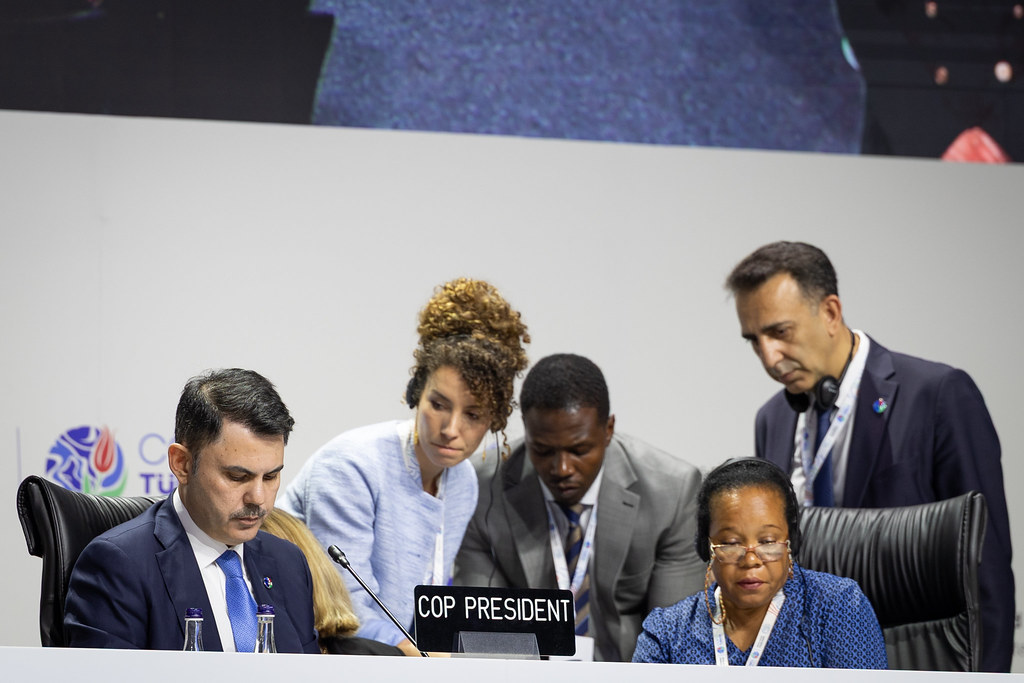
The COP31 climate summit in Antalya, Türkiye, ended on 22 November without a final agreement, a disappointing outcome for many. Talks ran two days past the scheduled close and it became the longest UN climate summit on record. There is still a lot to unpack.
It would be easy for Australian boards to read a summit without a deal as a summit without consequences. As a company director and sustainability adviser, I read it the other way. The pressure on companies to take responsibility for their emissions, support their communities and prepare for a warming climate was building long before Antalya, and the collapse of the talks has not eased it. With governments unable to set the pace together, there is room for business to lead.
What happened in Antalya
The talks broke down over fossil fuels and climate finance. The final draft made only a vague reference to the 2023 Dubai agreement on transitioning away from fossil fuels. It also dropped a US$120 billion adaptation finance target for poorer countries and added a late target for carbon capture and storage. The EU, the UK, Norway, Panama and Pacific island nations including Tuvalu refused to accept it, largely because it did not mention fossil fuels.
Some work went ahead. Negotiators extended the Just Transition Work Programme for three years, and countries signed voluntary pledges outside the formal text. Unresolved issues now go to COP32 in Addis Ababa.
Why a summit without a deal still impacts the boardroom
COP31 leaves Australia’s climate rules in place but changes the assumptions behind them. Mandatory climate-related financial reporting under AASB S2 already applies to Australia’s largest companies and Group 2 entities, and directors are accountable for these disclosures in the annual report. Group 3 starts with financial years beginning on or after 1 July 2027, though the Government has proposed lifting the size thresholds for that group. Safeguard Mechanism limits on the largest industrial emitters keep falling on schedule, generally by 4.9% a year to 2030.
The biggest change is to the warming assumptions behind those disclosures. The law already requires companies to test their resilience against two scenarios: warming limited to 1.5°C and warming that exceeds 2°C. The COP31 draft was the first UN climate text to accept that the world is on course to overshoot 1.5°C, and the UN Environment Programme puts current policies on track for about 2.8°C this century. In their next sustainability report, Boards should give the higher-warming scenario real weight in capital decisions and plan assets, supply chains and insurance.
Policy uncertainty is a real constraint. In a 2025 study by the AICD and the University of Sydney Business School, 51% of directors named unclear Australian policy as a barrier to governing nature-related risk, particularly the lack of national environmental standards. The study’s advice was to act early, with approaches that adapt as policy changes, instead of waiting for certainty. COP31 makes that advice more pressing.
The core takeaways for boards
The headline text failed, but the debates in Antalya show where international expectations of companies are heading. While the failure to reach a deal is a missed opportunity for governments, it gives business the chance to lead. Four issues stand out.
Responsibility for emissions
The argument over fossil fuel language is ultimately about who pays for emissions, and that question is moving from diplomacy into commerce. The UK used the summit to back calls for sector-specific ‘polluter pays’ levies to fund climate action. Europe’s carbon border adjustment mechanism, which puts a carbon price on imports of steel, aluminium, cement, fertilisers, electricity and hydrogen, entered its definitive phase on 1 January 2026. The UK’s version starts on 1 January 2027.
Boards in resources, energy, transport and heavy industry can expect closer scrutiny of how much they emit and how accurately they measure it, along with sharper questions about their transition plans. Emissions are becoming a cost line, and companies that cut them early will carry less of that cost. An Australian producer selling into Europe may need to show customers the emissions involved in making its products.
Electrification and supply chains
Türkiye made its voluntary 35-by-35 pledge the centrepiece of the summit. It aims to lift electricity’s share of the world’s final energy use to 35% by 2035, up from about 23% today. For companies, key opportunities for electrification are in procurement: fleets, freight, energy contracts and equipment. Australia’s largest companies must report value chain (Scope 3) emissions from their second reporting year, so their requests for data are already reaching suppliers. For directors, a practical question is which major assets you will replace before 2035, and whether the replacements will run on electricity.
Resilience and adaptation
Climate finance, especially for adaptation, was the other dealbreaker. Going into the summit, the UN Global Compact urged companies to let climate risk shape decisions on operations, investment, supply chains and workforce protection. Resilience planning belongs in the risk framework and the capital plan, and a standing place in capital approvals lets the board track whether the work gets done.
Pacific leaders used the summit to seek support for the Pacific Resilience Facility, which is raising US$500 million for community-led climate resilience and had passed US$200 million in pledges. It already funds 14 community projects across nine Pacific countries, so the people closest to the risks have a say in how the money is spent. For companies with operations or suppliers in the Pacific, it is a model worth backing.
Communities and a just transition
In Australia, the just transition is felt region by region. Local workforces and Traditional Owners have a stake in how it is done, as do the communities that host new transmission lines and renewable projects. Boards that ask management for a workforce and community plan, and that share the benefits of new projects with host communities, are building the social licence those projects depend on. On capital projects, that conversation belongs at the planning stage, before designs and contracts are locked in.
Monique Chelin’s view on the outcome
My first reaction is that the outcome is contradictory and almost inevitable that Australia could not lead such talks successfully while policy and practice at home reflects a misaligned approach. A draft that admitted the world will overshoot 1.5°C still left out fossil fuels and dropped the adaptation finance target that vulnerable countries were counting on. That contradiction is a clear sign of the conflicting interests at play. I don’t know whether COP32 will recover what was lost in Antalya, and boards shouldn’t bet on it. They can plan now for the physical risks and market shifts already under way – this is simply prudent risk and opportunity management.
People see through it now. The EU called the final draft greenwashing, and companies face the same test at home. Investors and customers want to see a funded plan behind a net zero target. Credibility comes from evidence, starting with a transition plan tied to capital spending and emissions data that would stand up to assurance.
The clean energy economy is being built with or without a UN text. The International Energy Agency expected clean energy investment in 2025 to be about double the investment in fossil fuels. Case in point - China holds about 85% of the world’s solar manufacturing capacity and 80% of its lithium-ion battery capacity.
The free trade agreement Australia concluded with the European Union in March will widen access to European buyers once it takes effect. The exporters who win there will be those that can back their products with credible emissions data. Boards that start now will have a year of data and a working transition plan by the time COP32 meets in Addis Ababa.
What does COP31 change on your board’s agenda?
Connect with Monique and read more at: https://www.mjcsustainability.com
About the author
Monique Chelin
Director, MJC Sustainability
Monique Chelin is an AICD-qualified company director, sustainability strategist and founder of MJC Sustainability, established in 2010. With more than 20 years of experience across Australia, Africa, Asia, the Middle East, Fiji and Papua New Guinea, she specialises in ESG risk management, green project management, infrastructure sustainability ratings and project rescue and recovery. A certified PRiSM™ (Projects integrating Sustainable Methods) trainer, Monique partners with GPM Global to deliver sustainability training. She is an Infrastructure Sustainability Council assessor and an expert in integrating the UN Sustainable Development Goals and UN Global Compact principles. Her clients have included Vodafone, BHP Billiton, Anglo American, Qantas, Virgin Australia and the Australian Government. Monique is the author of Switch it On! Activate Your Personal Potential and the children’s book Enzo Finds His Friends, which raises funds for animal welfare, and has been an Ambassador for Opportunity International Australia since 2010. Her focus is rescuing troubled capital projects and building sustainability capability in organisations worldwide.